
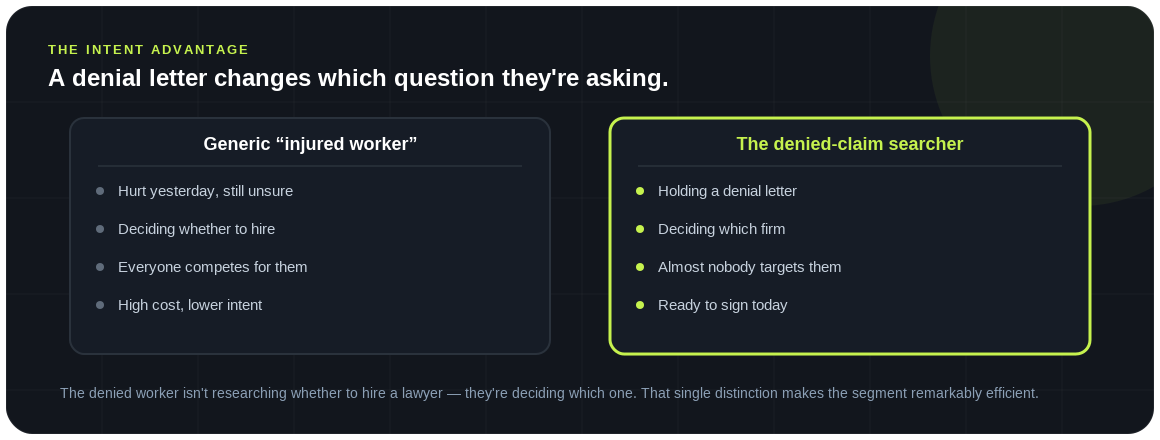
The injured worker who just got a denial letter isn’t researching whether to hire a lawyer. They’re deciding which one.
That single distinction is why denied claims are one of the most efficient case sources in workers’ comp — and why so few firms deliberately pursue them. Everyone crowds the top of the funnel, competing for the worker who was hurt yesterday. Almost no one speaks directly to the worker holding a denial, even though that worker has more urgency, more clarity, and more reason to sign today.
This piece explains why denied claims are often strong cases, why the segment is underserved, and exactly how to market to — and intake — the denied worker.
Why denied claims are often strong
A denial is a decision that can be challenged — not a verdict on the injury.
Claims get denied for all sorts of procedural and evidentiary reasons: a missed reporting deadline, a paperwork gap, a disputed cause, an insurer betting the worker won’t push back. None of those means the underlying injury isn’t compensable. As state agencies themselves note, a denied claim can be appealed and challenged (see, for example, California’s DWC guidance on denied claims).
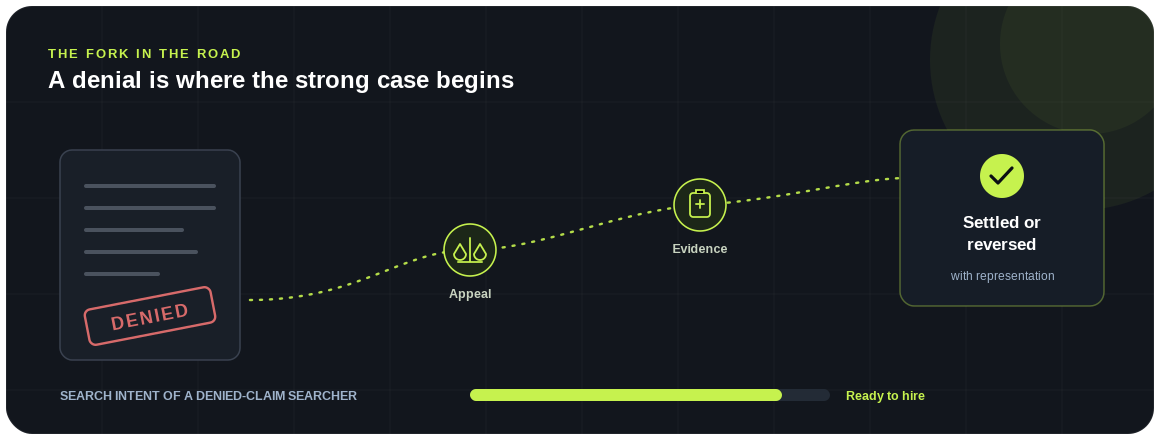
Crucially, representation changes the trajectory. An unrepresented worker often accepts a denial at face value; a represented one can appeal, marshal medical evidence, and negotiate. Many denied claims are ultimately overturned on appeal or resolved through a fair settlement once an attorney is involved — which is precisely the value a firm brings.
Picture the path, not the dead end: the denial most workers accept at face value becomes, with representation, an appeal, the right medical evidence, and often a settlement or reversal — and the searcher holding that letter isn’t browsing, they’re ready to hire. The illustration below traces that arc.
Why the segment is underserved
Everyone markets “injured? call us.” Almost no one markets to the denial.
Open any workers’ comp firm’s ads and you’ll see the same message: hurt at work, we can help. It’s aimed at the freshly injured. That’s a crowded, expensive auction.
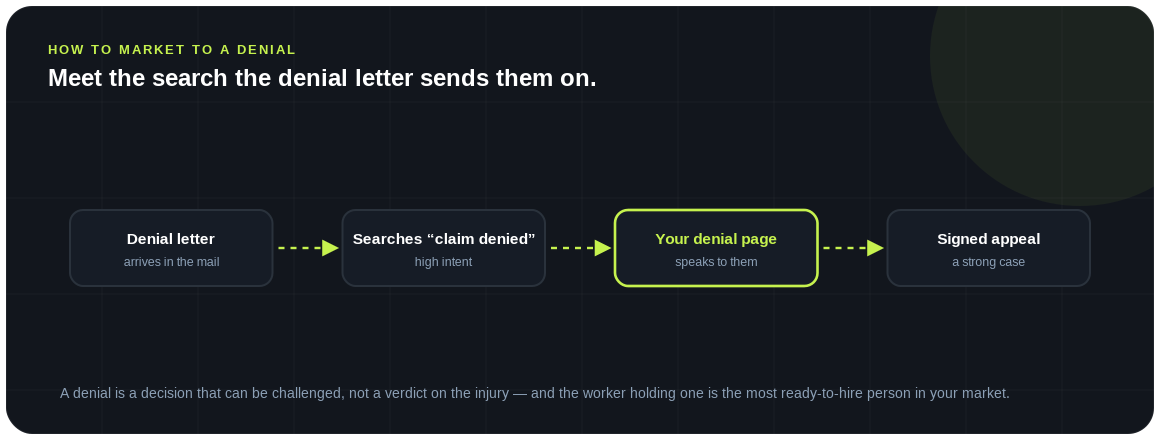
The denied worker is searching different things — “my workers comp claim was denied,” “appeal a denied work injury claim,” “workers comp denied what next” — and finding mostly generic pages that don’t speak to their moment. A firm that answers that exact query, with content and ads built for the denial, meets high intent with low competition.
Specialization concentrates relevance and lowers acquisition cost. The denied-claim searcher is looking for a firm that does exactly this — so be that firm, visibly.
Spencer Moeller, WorkersComp MarketingThe intent advantage
Fresh-injury traffic is researching. Denied-claim traffic is buying.
Search intent is the whole game. A newly injured worker may be weeks from hiring anyone. A denied worker is past the research phase — they’ve hit a wall and need help now. That higher intent typically means a higher close rate and a lower effective cost per signed case, even if the raw search volume is smaller.
| Freshly injured | Denied claim | |
|---|---|---|
| Intent | Researching | Ready to hire |
| Competition | Very high | Lower |
| Urgency | Variable | High (deadlines loom) |
| Close rate | Baseline | Often higher |
How to market to denied claims
Build for the query. Speak to the moment.
Dedicated landing pages
Create pages built specifically around “my claim was denied” — what a denial means, that it’s appealable, common reasons, and a clear, reassuring next step. This is where your landing-page conversion work pays off.
Denial-specific search & LSA
Target denial-related keywords in Google Search and back them with Local Services Ads. Intent is high; the click is worth more because it’s closer to signing.
Content that answers the question
Publish genuinely helpful articles answering exactly what a denied worker asks. It ranks, it builds trust, and it feeds retargeting.
Intake for the denied caller
This caller is frustrated and skeptical. Lead with reassurance.
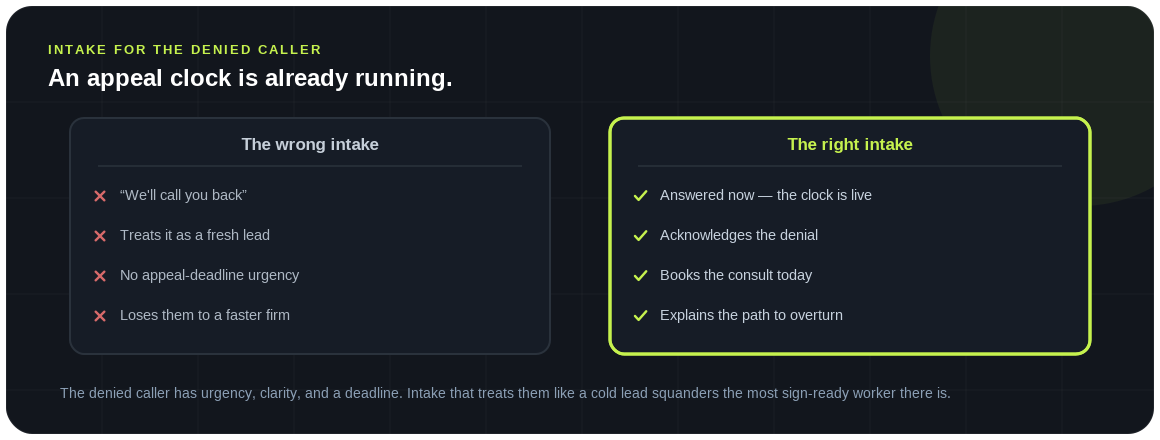
The denied worker often calls feeling defeated — they were already told no. The opening job is to reset that: a denial is common, it’s not the end, and fighting denials is exactly what the firm does. Then gather the denial reason and the key facts.
Our free Intake Playbook includes a dedicated denied-claim branch script. And keep it ethical: never guarantee an outcome — explain the process and route legal specifics to an attorney.
Key takeaways
-
Denied claims are often strong. Claims get denied for procedural and evidentiary reasons that do not reflect the injury’s merits, and many are overturned.
-
The segment is underserved. The denied worker finds generic directory pages, not a firm that speaks to their exact moment.
-
Denied callers are high-intent. They filed, were told no, and are still looking: rarely frivolous, already self-selected for seriousness.
-
Market to the denial, not the injury. “My workers comp claim was denied” is a different query that meets high intent with low competition.
-
Intake has to meet the frustration. The denied caller needs to hear that “no” is not the end before they will re-engage.
Frequently asked questions
Are denied workers’ comp claims actually worth taking?
Often, yes. Claims are frequently denied for procedural or evidentiary reasons that don’t reflect the merits of the injury, and many are overturned on appeal or resolved through settlement once an attorney is involved. Each case still needs an attorney’s evaluation, but denied claims are far from automatically weak.
Why target denied claims instead of new injuries?
Intent and competition. Newly injured searchers are often still researching and sit in a crowded, expensive auction. Denied-claim searchers are past the research phase — they’ve hit a wall and need help now — so they typically convert at a higher rate and lower effective cost per signed case.
What keywords do denied workers search?
Queries like ‘my workers comp claim was denied,’ ‘appeal a denied work injury claim,’ ‘workers comp denied what next,’ and variations. Building pages and ads around these exact phrases meets high intent that most firms ignore.
How should intake handle a denied-claim caller?
Lead with reassurance: a denial is common and appealable, and fighting denials is what the firm does. Then gather the denial reason and key facts. Never guarantee an outcome, and route legal-specific questions to an attorney.
Sources & further reading
-
01
What a denial actually means
State guidance confirming a denied claim can be appealed and challenged, often on procedural grounds.
-
02
Further reading
Reaching and converting the denied caller.
Rules vary by state and change over time — confirm your state’s version with bar counsel. General marketing information, not legal advice.