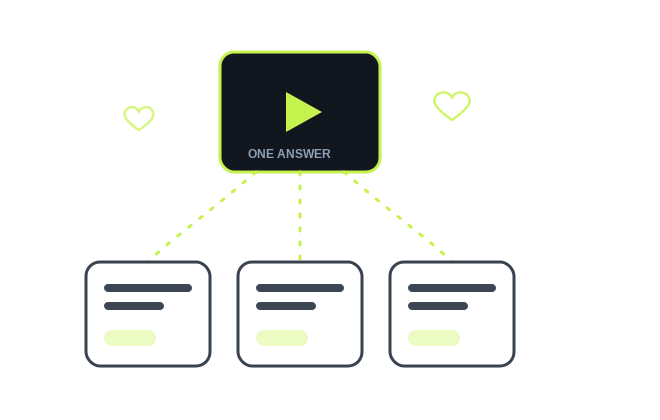
Ask an injured worker why they called the firm they called, and you rarely hear “best Google ranking.” You hear: I’d seen them around.
“Around” used to mean a billboard and a bus bench. Today it mostly means a feed: the attorney who answered a comp question in a sixty-second video that surfaced between recipes, three weeks before the forklift accident. That exposure cost the firm nothing but discipline — and at hiring time it out-punches strangers with bigger ad budgets, because familiarity is the tiebreaker in every choice made under stress.
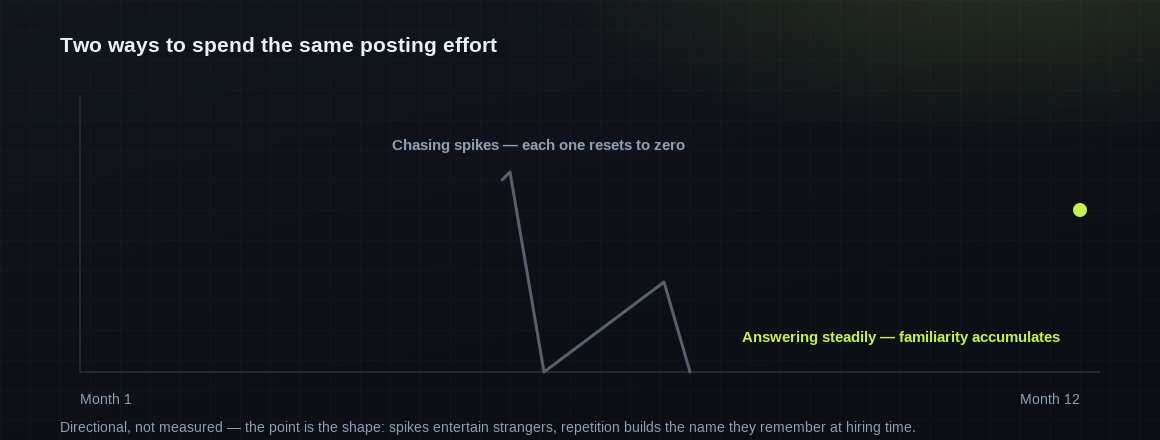
That is the entire case for organic social, stated honestly. It is not a lead channel; it is a pre-need familiarity channel. Firms that grasp that stop chasing spikes and start compounding. Firms that don’t either quit in month two (“no cases came in”) or burn out an associate making dance-trend content that embarrasses everyone involved.
The job social actually does
Every channel in your portfolio has a job. Paid search harvests ready-now demand. The website converts. Email nurtures the slow yes. Organic social’s job sits earlier than all of them: it makes injured workers — and the people injured workers ask for advice — recognize your name before anything has happened to them.
That framing settles the arguments that usually kill a firm’s social effort. Should we chase trends? No — a viral clip seen by a million people in other states builds nothing; a helpful clip seen repeatedly by ten thousand locals builds the only asset that matters. Should we post about firm culture and awards? Sparingly — the audience’s question is never “is this firm having fun,” it is “would these people take my situation seriously.” Should we quit because no cases arrived in ninety days? Only if you also cancel your signage for the same reason.
What to post: answers, on camera, forever
The content question has a boring, reliable answer: the questions your intake desk already hears. Can I be fired for filing? Can I see my own doctor? What if the adjuster stops calling back? What does a lawyer cost if we lose? Your intake calls are a content calendar someone already wrote — every anxious question asked twice is a clip.
Format matters less than people fear. A lawyer, a phone camera, decent light, one question answered in plain language in under ninety seconds. No script voice — the entire value is that a real attorney sounds like a person. End the same way every time: your name, your market, one sentence of invitation. That repetition is the branding.
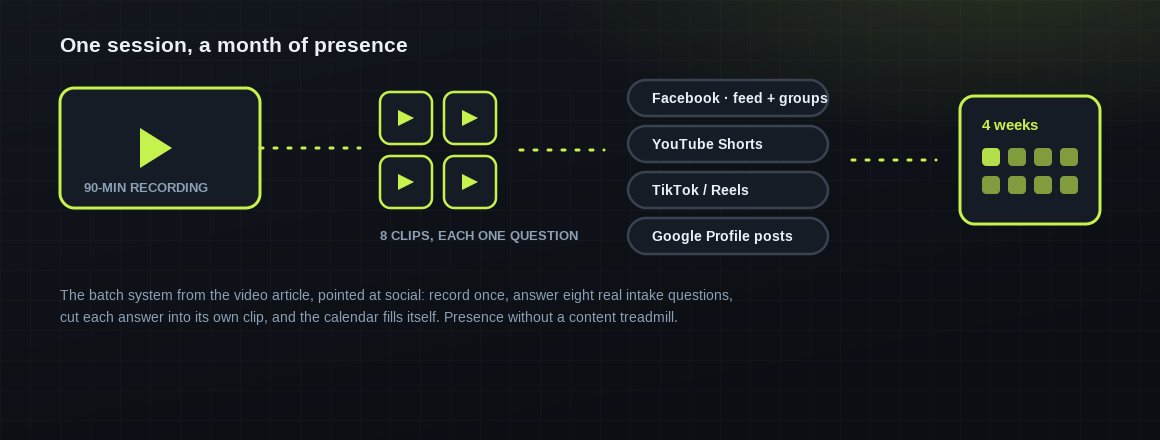
The sustainable cadence comes from batching, the same system the video article lays out: one ninety-minute session, eight questions, eight clips, a month of presence. A firm that batches survives; a firm that tries to be creative every Tuesday quits by June.
Where to spend your finite time
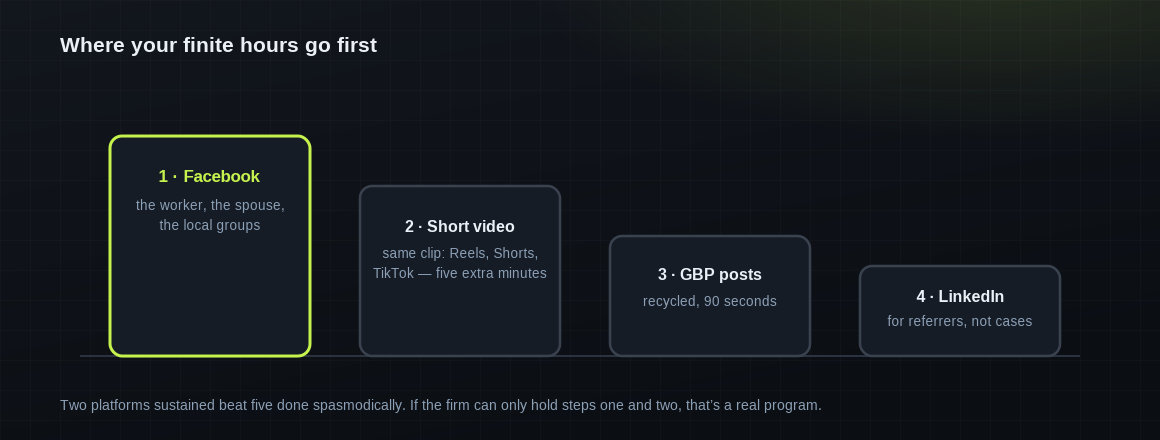
Every platform pitch deck says “be everywhere.” You have a law practice. Priorities, for this buyer:
Facebook first. Still where the working-age injured population and — critically — their spouses and parents spend feed time, and where local groups (“jobs in [county]”, neighborhood pages) concentrate your actual market. The firm page posts the clips; the lawyers behave like helpful humans where allowed.
Short vertical video second — posted everywhere at once. The same clip goes to Reels, YouTube Shorts and TikTok in five extra minutes. YouTube earns a special word: Shorts double as search results, and “can I be fired on workers comp” is searched on YouTube every day. Your answer sits there for years.
Your Google Business Profile third. Posts there aren’t social in the feed sense, but they show activity exactly where map-pack comparison happens, and they take ninety seconds of recycling.
LinkedIn, deliberately last for cases — first for referrals. Injured workers aren’t hiring there, but the professionals who send you cases are watching. Treat it as the referral engine’s public face, not an intake channel.
A note on negative comments, because every firm asks: you will get them — the ex-client with a grievance, the troll, the “all lawyers are crooks” drive-by. The playbook is short. Never litigate a case in a comment thread, never confirm anyone is or was a client, respond once with calm generality if a response is warranted (“we take client concerns seriously — please call our office so we can help directly”), and hide rather than delete where platforms allow — deletion screenshots become their own story. The audience you care about isn’t the commenter; it’s the hundred quiet people reading how you handle it.
The lines a law firm can’t cross for engagement
Social’s incentives — be provocative, be personal, be fast — run directly against attorney-advertising discipline. The lines, plainly:
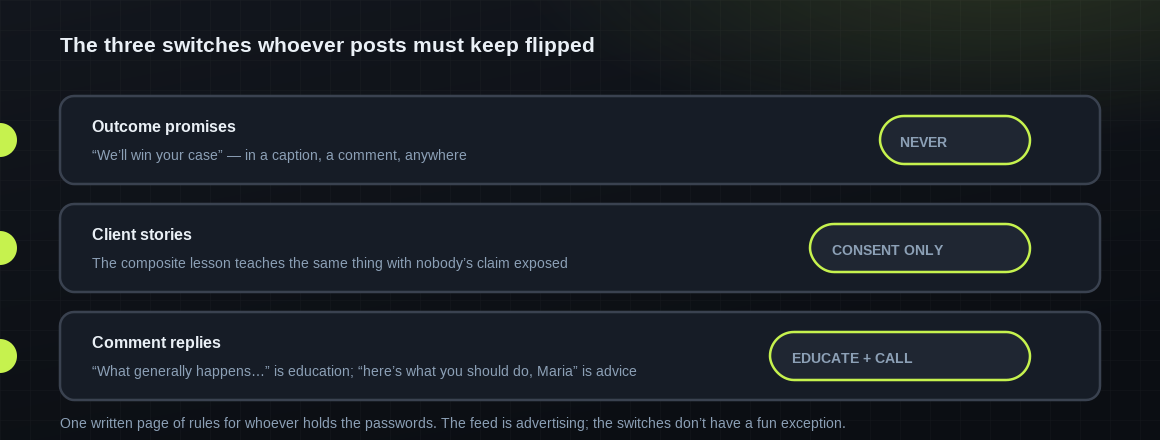
No outcomes promised, anywhere. The same false-or-misleading standard that governs your ads governs a caption. “We’ll win your case” in a comment reply is an advertising-rules problem with a timestamp.
Client stories need written consent — and usually don’t need the client. The composite lesson (“a worker in this situation generally…”) teaches everything the testimonial would, with nobody’s claim exposed. Never confirm someone is a client in public, including by replying to their thank-you comment carelessly.
Answer the question type, not the case. “What generally happens when a claim is denied” is education; “here’s what you should do, Maria” is legal advice to a stranger, delivered in public. Move specifics to a call, every time — a standard reply saved in your notes app makes this effortless.
It also pays to know what the platforms themselves reward right now, stated at the level that stays true: feeds favor watch time and completion over follower counts, which is why a sixty-second answer that people finish outperforms a three-minute one they abandon; native uploads outrun shared links everywhere; and early engagement from people who already follow you is the seed the algorithm waters — another argument for the consistent posting time and the staff habit of engaging in the first hour. None of this requires gaming anything. It requires what the whole system already requires: short, useful, finished answers, posted steadily, to an audience that slowly learns your name. The platforms’ incentives and the injured worker’s interests point, for once, in the same direction.
Measuring a channel that doesn’t click
Organic social’s value shows up in other channels’ numbers, which is why it gets miscredited as worthless. Watch four things, quarterly:
| Signal | Where | What it means |
|---|---|---|
| Branded search volume | Search Console | People who met you in the feed are looking you up by name — the familiarity meter |
| Direct + profile traffic | Analytics, Business Profile | Feed presence turning into deliberate visits |
| “How did you hear about us?” | Intake, asked every time | “I follow your videos” is attribution — log it as a source, not an anecdote |
| Retargeting pool size | Ads manager | Every organic viewer is a person your paid retargeting can reach for pennies |
That last row is the bridge most firms never build: organic and paid aren’t rivals. Organic fills the pool; paid fishes it. A clip that answered a question for free becomes the warm audience your cheapest campaigns run against — which is how a “free” channel ends up lowering cost per signed case without ever signing a case itself.
Social doesn’t make the phone ring this week. It decides whose number gets dialed the week it matters.
Set the baseline before you start, or you will never prove any of it.
The measurement problem with a familiarity channel is not that the effect is invisible. It is that the effect is slow, and by the time it arrives nobody remembers what things looked like beforehand. Fix that in twenty minutes, before the first video goes out.
Ninety days later, run the same four. You are not looking for a spike; you are looking for a line that has moved up and stayed there. Familiarity does not produce a campaign-shaped result and a channel judged on campaign-shaped results will always look like it failed.
The intake question is the cheapest and most under-used of the four. One field, asked once, in the enquiry conversation: had you come across us before today? It costs a receptionist four seconds and it is the only direct evidence that pre-need familiarity is doing anything. Record the answer somewhere structured rather than in a notes field, and it becomes the number that justifies the channel to a partner who thinks video is a hobby. It also feeds the attribution picture that the paid channels are already measured against.
The 30-day start
Week one: write down the ten questions intake hears most. Pick the two platforms you can sustain. Write the one-page comment rules and hand them to whoever posts.
Week two: one recording session — eight questions, phone camera, plain language, same sign-off. Cut into clips (a paralegal with CapCut is plenty; polish is not the point).
Weeks three and four: post two clips a week per platform, recycle the best into Google Profile posts, and reply to every comment with the education-not-advice standard. Book next month’s recording session before this month’s clips run out — that appointment, not motivation, is what keeps the system alive.
What to actually say: three scripts that work
The blank-camera problem kills more firm social programs than any algorithm. Here are three sixty-second structures you can shoot this week — each is a skeleton, not a teleprompter; the value is a real lawyer talking like a person.
The straight answer. “Can you be fired while you’re on workers’ comp in [state]? Short answer: being on comp doesn’t make you fireable, but it doesn’t make you unfireable either — here’s the difference…” Then thirty seconds of the honest nuance, then the sign-off. Structure: question → direct answer in the first ten seconds → the one wrinkle people don’t expect → “every case is different — if this is you, call us and we’ll look at yours.” This is 70% of your library.
The myth flip. “Here’s something almost everyone believes about workers’ comp that isn’t true…” — then the belief (“if the accident was my fault, I have no case”), then why it’s wrong in a no-fault system, then what actually disqualifies a claim. Myths travel because the correction is genuinely surprising — this format earns shares from people who aren’t injured, which is exactly how familiarity spreads through a family before the injury happens.
The process walk. “You got hurt at work this morning. Here’s what the next two weeks actually look like…” — report, medical, forms, the adjuster call, when a lawyer enters. No selling anywhere in it; the competence is the selling. These become your most-saved posts, because they’re useful before anyone needs you — which is the entire strategy in one format.
The workflow: captions, accessibility, and who does what
The system survives on role clarity. The attorney’s job is ninety minutes a month on camera — that’s the whole ask. Everything else is staff process, and it looks like this:
Captions are not optional. Most feed video plays muted, and injured workers watching at work or beside a sleeping spouse won’t unmute you. Burned-in subtitles (CapCut, Descript, any of them auto-generate; a paralegal cleans up the legal terms) double as accessibility — the same edit serves deaf viewers and muted scrollers. A video without captions is a video half your audience never heard.
The caption text does separate work. The first line above the video is a second headline — restate the question, don’t describe the video (“Can you be fired on workers’ comp?” beats “Attorney Smith discusses employment protections”). Add the state, because you want local reach, not national applause. Skip hashtag salads; two or three local and topical tags do whatever tags still do.
Post natively, per platform. Upload the file to each platform rather than cross-linking — feeds demote outbound links and reward native video. The five extra minutes per platform is the entire “cost” of being everywhere the clip fits. Schedule the month in one sitting with each platform’s own scheduler; third-party schedulers are fine too, but the built-ins are free and nobody gets locked out of anything when a subscription lapses.
The comment shift. Fifteen minutes, twice a day, whoever owns it that week: answer with education, move specifics to a call with the saved reply, hide spam, screenshot anything that smells like a real potential client and route it to intake immediately — a DM that says “my husband got hurt at the plant” is a lead with a response-time clock on it, and it belongs in the CRM like any other.
The LinkedIn layer: social for the people who send cases
Everything above chases the injured worker’s family. LinkedIn chases a different, smaller, richer audience: the union reps, the treating-clinic managers, the PI lawyers who don’t handle comp, the HR people who quietly tell a hurt friend to get counsel. This is the referral engine’s public feed, and it wants different content than the worker-facing channels.
What works there is professional generosity: the plain-English explainer of a rule change other lawyers will forward; the “what we’re seeing in [state] claims this quarter” observation post; the co-counsel thank-you that names the referring firm (with permission) and quietly advertises that you share fees properly and return calls. One post a week is plenty. The measure isn’t engagement — it’s the referral conversation that starts with “I saw your post about the new rule.”
And the founder’s profile matters more than the firm page here. People refer to people. A managing partner whose profile shows a real practice, real writing and a real face gets the benefit of the doubt that a logo never earns — the same reason the injured-worker channels put the attorney on camera.
Key takeaways
-
Social’s job is not clicks, it is familiarity. It warms the audience so that when they need you, you are already a known face.
-
Post answers, on camera, built to last. Short videos answering real questions outperform polished brand posts.
-
Spend your finite time where it pays. A focused presence on one or two platforms beats a thin spread across five.
-
A law firm has lines it cannot cross for engagement. No results claims, no confidences, no bait: compliant beats viral.
-
Measure a channel that does not click. Reach, saves, and assisted conversions, not vanity likes, tell you it is working.
Frequently asked questions
How often does a workers’ comp firm actually need to post?
Two to three times a week per platform, sustained, beats daily for a month followed by silence. The algorithm cares about consistency less than people claim, but your audience’s memory cares about it enormously — familiarity is built by repetition over months. Set the cadence you can keep on your worst week, batch to protect it, and treat the monthly recording session as an unmovable appointment.
Should the lawyers appear on camera, or can staff run it?
The attorneys, for the content itself — the entire premise is that an injured worker comes to recognize the actual person who would take their call. Staff can run everything around the camera: cutting clips, scheduling, first-pass comment replies under the written rules. A firm page with no visible lawyer is a logo talking; logos don’t build the trust this channel exists to build.
Is TikTok appropriate for a law firm?
The platform is neutral; the content is what carries risk. A lawyer calmly answering “can I be fired while on comp” is exactly as professional on TikTok as on your website — and reaches working-age people other channels miss. What’s inappropriate is chasing trends that trade dignity for reach. Post the same helpful vertical video everywhere it fits; skip anything you wouldn’t show a referring doctor.
Do we need to worry about bar rules for a ‘fun’ channel?
Yes — the rules don’t have a fun exception. Posts and comments from a firm account are attorney advertising in most states’ eyes: no guaranteed outcomes, testimonial rules apply, and answering a specific person’s specific situation in public edges into advice with none of the protections of a consultation. One page of written guidelines solves ninety percent of it; check your own state’s rules for the rest.
How long before we see any effect?
Familiarity compounds on a quarters clock, like content and reviews. Early signals arrive sooner: comments and shares within weeks, branded-search lift and “I’ve seen your videos” at intake typically inside a couple of quarters of steady posting. If you need leads this month, this is the wrong tool — run paid for now and build this alongside, so next year’s buyer already knows you.
Can’t we just boost posts instead of doing all this?
Boosting is paid media wearing social’s clothes — useful, but it answers a different question. A boost buys one burst of reach; the organic system builds an owned library of answers, a recognizable face, and a retargeting pool that makes every paid dollar cheaper. The strongest setup uses both deliberately: organic fills the pool and earns the trust, paid — run properly through Ads Manager rather than the boost button — harvests it.
Sources & further reading
-
01
The organic engine it feeds
Where social content compounds.
-
02
Own-audience channels
The audiences you keep, not rent.
-
03
Convert, comply, measure
Turn attention into cases, within the rules.
Benchmarks here draw on WorkersComp Marketing’s own managed-spend data across live firms; your numbers will differ. General marketing information, not legal advice.